In Queensland, every state school has a catchment, and a child who lives inside it is guaranteed a place. Living outside it puts you on a waiting list. Catchment status is decided by your home address, whether you rent or own, and it is checked with documents. If you are moving to Brisbane with school-age children, this is the rule that will shape where you live. Here is how it works and how to use it.
What a catchment is
The Department of Education defines a catchment as the area where a school's core intake must live. Its purpose is to make sure every student from Prep to Year 12 can enrol at their local state school. Your local school is the state school closest to your home, measured by the shortest road route to its main entrance, not by a straight line on the map.
Catchments can differ by year of enrolment and by year level, and the department can redraw them when a new school opens or an existing one fills. An address inside the catchment today is not a guarantee for a child starting in three years. The Brisbane State High School enrolment plan says exactly that.
How to check an address
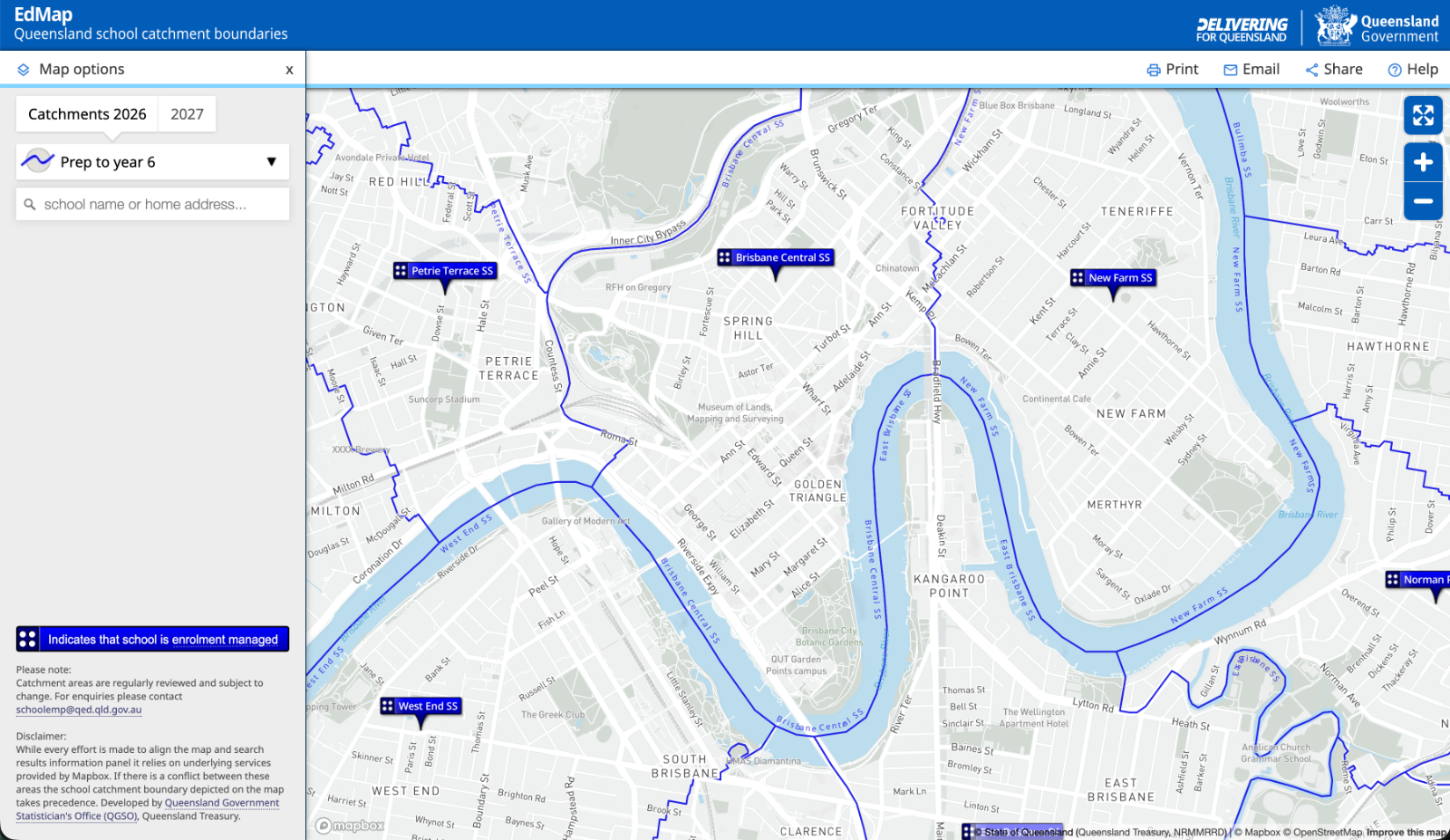
Use EdMap, the department's catchment map at qgso.qld.gov.au/maps/edmap. Search by street address, choose the enrolment year and year level, and it returns the primary and secondary school for that address. Search by school name to see the boundary drawn on the map. Do this for every property you shortlist, before the inspection. Agents' listings often say "in catchment" for the wrong school or for a boundary that has since moved.
Enrolment management plans
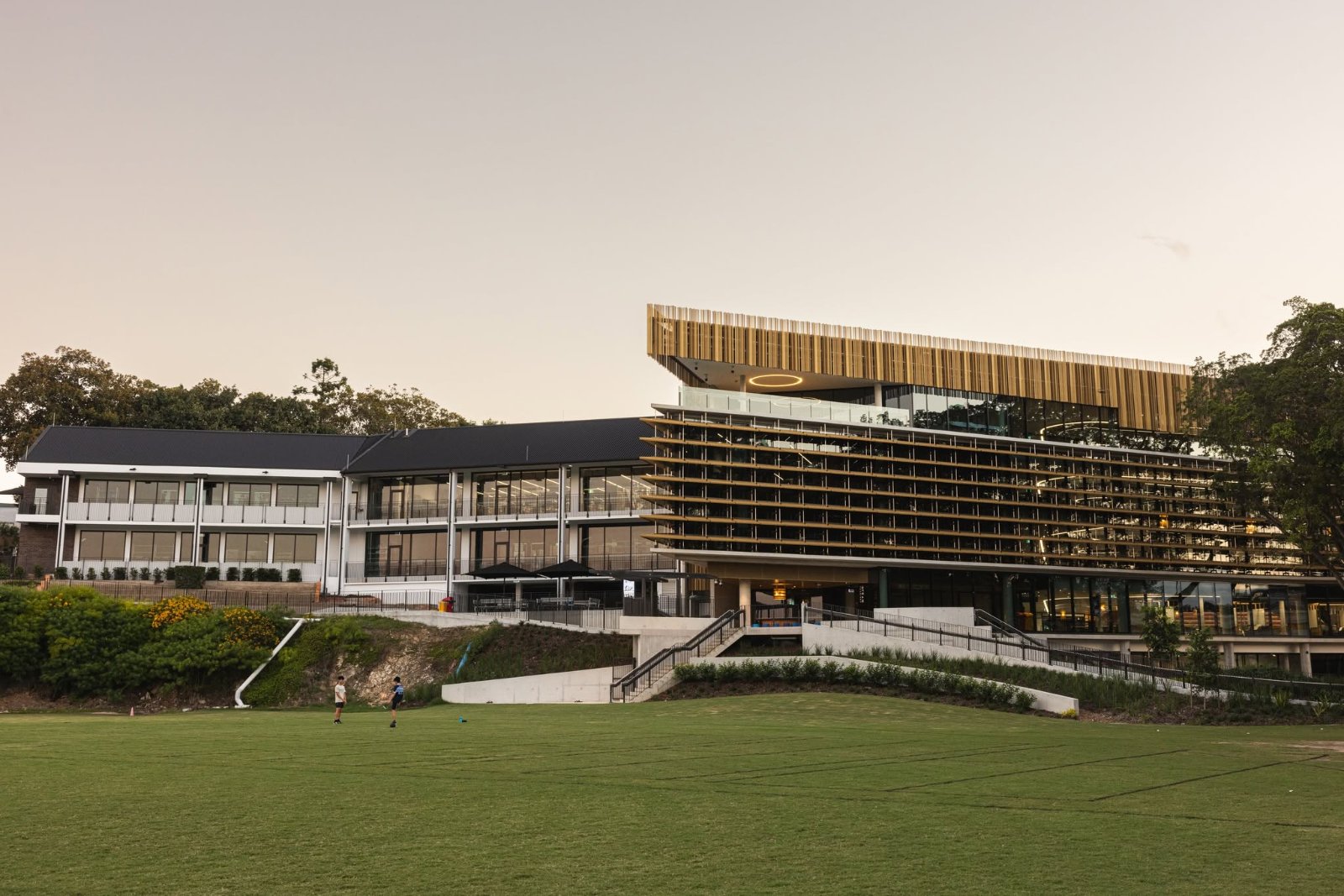
When a school is at or near capacity it adopts an enrolment management plan. The plan lists the catchment, the school's capacity, the proof-of-residence rules and the criteria for out-of-catchment applicants. Schools with a plan are flagged on EdMap. Popular Brisbane examples include Brisbane State High, Mansfield State High and many inner-city primaries; new schools usually open with a plan in place.
For an enrolment-managed school, in-catchment is close to the only way in. Out-of-catchment applications go on a waiting list and are assessed in order received, after every local child is placed and after the school has kept room for families who move into the catchment during the year.
Proof of residence
Enrolment-managed schools ask for evidence that the student genuinely lives at the address. The exact list is in each school's plan, and it differs for owners and tenants. Typical documents are a rates notice or a signed lease, plus a current utility bill or driver licence at the address. Brisbane State High also requires parents to sign a statutory declaration and to report any change of address within 14 days. Schools do check, and an enrolment obtained with a false address can be cancelled.
Renting counts the same as owning
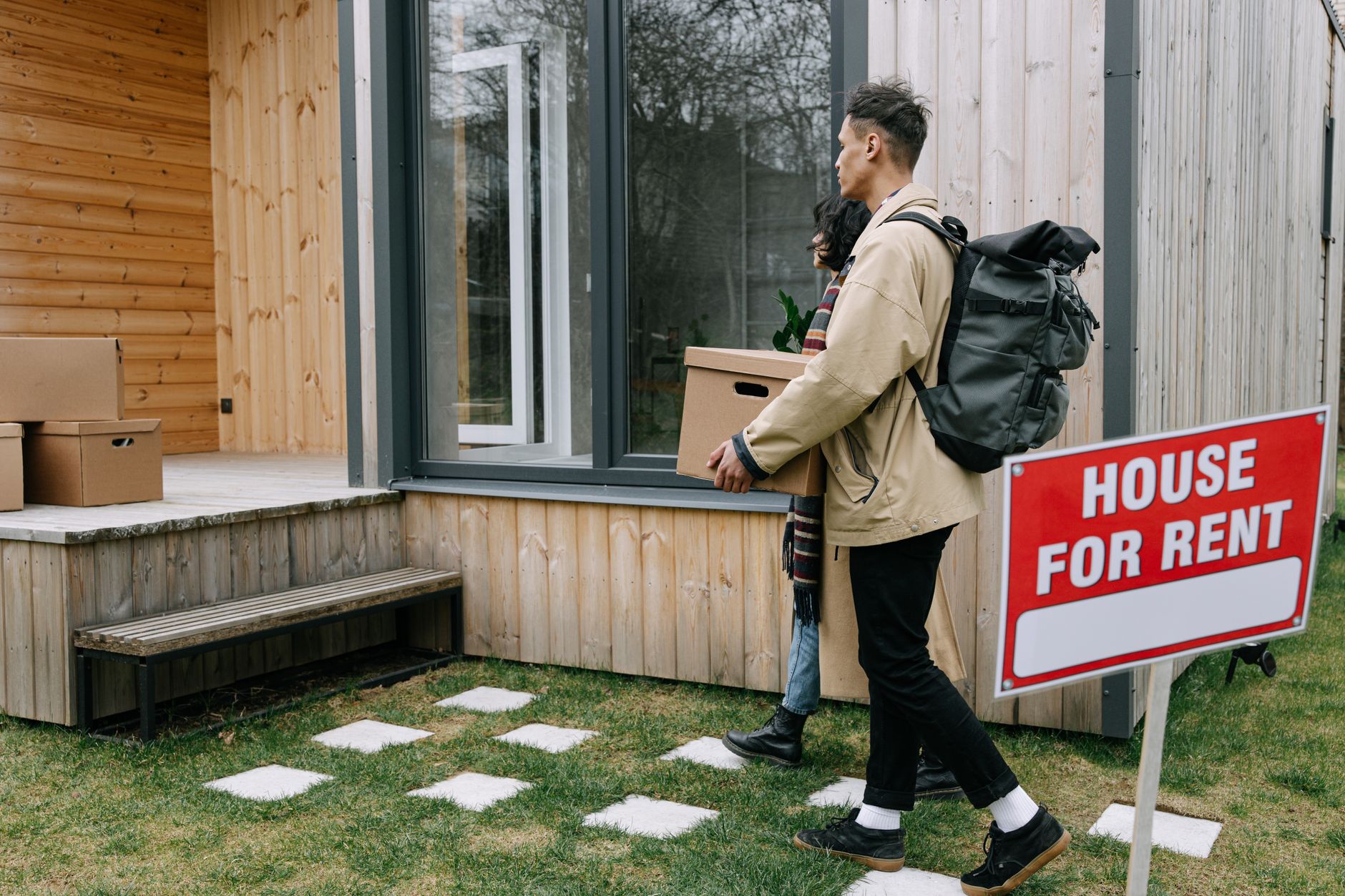
Catchment eligibility is about where the child lives, so a lease in the catchment is as valid as a title. Many families moving to Brisbane rent inside a catchment for the first year while they learn the city, then buy. Two cautions. The lease has to be genuine and current at enrolment, and some schools ask for a minimum lease term. And moving out of the catchment after enrolment does not usually remove a student already enrolled, but check the school's plan, because the rules on continuing enrolment vary.
What catchments do to prices
A sought-after secondary catchment adds a premium to house prices, and the premium is sharpest on the boundary streets. Two near-identical houses on opposite sides of a catchment line can differ by well over $100,000 in Brisbane's southern suburbs. Suburbs such as Rochedale, Mansfield and Wishart are priced partly on the Mansfield State High boundary; inner-south suburbs are priced partly on Brisbane State High. Our Rochedale guide shows how that plays out in one suburb.
The premium is also a risk. If the department redraws the boundary, the premium can go with it, and families who bought at the top of a boundary street carry that. Buy a house you would want without the catchment, then treat the catchment as the reason to pay a little more, not a lot.
Private and Catholic schools
Catchments only apply to state schools. Independent and Catholic schools enrol by application, with their own waiting lists, fees and priority rules, such as siblings or parish membership. If you plan on a private secondary school, the catchment of the local state primary matters less, and you can widen the suburb search.
A step-by-step plan for a family arriving in Brisbane
- Shortlist secondary schools first; primary catchments are smaller and more numerous, so they are easier to satisfy.
- Check each shortlisted school on EdMap for the year your child will start, and note whether it is enrolment-managed.
- Download the school's enrolment management plan and its proof-of-residence list before you sign a lease or a contract.
- Search listings or rentals inside the boundary, and confirm each address on EdMap yourself.
- Keep the lease or contract, a utility bill and your licence at the new address ready for the enrolment interview.
- Apply as early as the school allows. Brisbane State High opens Year 7 applications in the first half of the year before entry.
Your address decides the school. Check it on EdMap for the right year and year level before you pay a catchment premium.
For the rest of the move, read our guide to moving to Queensland in 2026.
This article is general information only and not financial, legal or tax advice. Figures are correct at the date of writing and change; check the source or speak to a licensed adviser before acting.
Source: Queensland Government, School catchment areas, accessed 17 Oct 2026 — https://www.qld.gov.au/education/schools/find/enrolment/catchmentSource: Queensland Government Statistician's Office, EdMap school catchment map, accessed 17 Oct 2026 — https://www.qgso.qld.gov.au/maps/edmap/Source: Department of Education (Qld), Brisbane State High School enrolment management plan, accessed 17 Oct 2026 — https://education.qld.gov.au/parents-and-carers/enrolment/management-plans/brisbane-state-high-schoolSource: Brisbane State High School, Local catchment area and proof of residence, accessed 17 Oct 2026 — https://brisbaneshs.eq.edu.au/enrolments/enrolling-at-our-school/local-catchment-area